Hiring a Studio for a Group or Team Photo in Sydney
October 9, 2026
There is a particular kind of panic that arrives about four minutes into a group shoot. Everyone is in the room, the back row is already shuffling, someone has gone to find a coffee, and you are standing behind the camera realising you cannot fit the last two people in the frame without backing into a wall.
At Desk and Studio, we have watched a lot of group shoots, and almost every problem we see traces back to the same thing: the room was too small, or the plan was made for eight people and twenty turned up. Group photography is not technically harder than a portrait. It is just much less forgiving of a space that cannot take it.
Here is what actually matters when you are hiring a studio for a team, a band, a cast, a club or a very large family.
Why group shots need more room than you think
The constraint is rarely width. It is depth.
To fit a row of people across your frame without distorting the faces at the edges, you need a reasonably long lens, and a long lens needs distance. Shoot a line of eight adults on a 24mm from three metres away and the people on the ends will look stretched and strange. Shoot the same line on an 85mm and you need to stand a good deal further back.
That is the maths that catches people out. A room can be plenty wide and still be useless for a group, because there is nowhere to put the camera. Our shooting floor is 9 metres deep, which is what makes a long lens possible, and 5.7 metres wide with 4.6 metre ceilings, which is what lets you spread people out and get light above them rather than squeezing it in beside them.
Height matters more than people expect, too. The moment you stack a second row on a riser or ask someone tall to stand at the back, a low ceiling puts your key light in the shot or forces it down onto the front row and leaves the back row dark.
How much space a group actually takes
A rough working guide, worth testing against your own shoot rather than treating as gospel:
- Up to six people fit comfortably in a single row on most backdrops, with the camera four to five metres back.
- Eight to twelve usually wants two staggered rows and a wider sweep, with the camera as far back as the room allows.
- Fifteen and up generally means three rows, some seated, some standing, and a deliberate shape rather than a straight line.
Paper rolls have a finite width, so for very large groups it is often better to shoot against the white brick or an open wall than to fight a backdrop that does not reach. Decide this before the day, not while twenty people are watching you think.
Lighting a group evenly
The failure mode with groups is a hot centre and dark edges, or a crisp front row and a muddy back row. Both come from the same cause: a light that is too close and too small.
- Go bigger and further back. A large modifier at distance gives you a much more even spread across a wide subject than a small one up close. A 140cm octa or a pair of large softboxes placed wide and high will cover a group far more evenly than a single beauty dish.
- Use two lights at matched power, not one. Place them at roughly 45 degrees on each side, high, feathered towards the centre. You are aiming for soft, even coverage rather than dramatic shaping.
- Watch your aperture. Depth of field is the quiet killer in group shots. With two or three rows you need enough depth to keep the back row sharp, so f/8 or tighter is usually safer than the f/2.8 you would use for a single portrait.
- Focus on the front of the second row. With rows stacked, focusing slightly into the group rather than on the very front face distributes your depth of field more usefully.
- Add a little separation. A light on the background, or a hair light from behind, stops a dark-clothed group from merging into a dark backdrop. This is the detail that makes a team photo look professional rather than functional.
- Shoot more frames than feels necessary. With twelve people, someone is always blinking. Fire in bursts of three or four, and keep shooting through the moment everyone relaxes after you say you are done. That is usually the good one.
- Check the back row on a big screen. Not the camera back. Faces hidden behind shoulders are nearly impossible to spot on a small screen and impossible to fix later.
Wrangling people: the part nobody plans for
The technical side of a group shoot is the easy half. The hard half is that you are directing a room full of adults who did not choose to be there.
Build your time around it. A group of twenty will take fifteen to twenty minutes simply to arrive, find the room and put their bags down. Budget that as real time, not as a buffer you hope not to use.
Place people yourself rather than asking them to arrange themselves, and place them fast. Tall at the back is the obvious start, but mix heights slightly so the rows do not read as a wall, and stagger faces into the gaps of the row behind. Give one clear instruction at a time. Twenty people cannot follow three at once.
It helps enormously to have a second person in the room, even an unofficial one, whose only job is to watch for crooked collars, hidden faces and the person who has wandered off. Our change area and kitchenette give people somewhere to wait that is not in your frame, which sounds minor and is not.
If your group is a performing one, with movement, instruments or costume, our post on hiring a studio for dance, movement and performer portraits covers the extra considerations. If you are photographing a company and need individual portraits as well as the group, our headshot day guide pairs well with this one, and the studio shoot day run sheet will help you build the timings.
Frequently Asked Questions
How big a group can a studio realistically take?
It depends far more on the depth of the room than the width. With 9 metres of depth and 4.6 metre ceilings, a group of fifteen to twenty in staggered rows is very workable. Beyond that, come and look at the space with your numbers in hand and we will walk through it with you.
How long should I book for a team shoot?
For a single group image plus a few variations, a half day is usually ample and leaves room for the inevitable late arrival. If you also want individual portraits of everyone, a full day is the safer booking, because individual headshots at three to five minutes each add up quickly.
Do I need to bring lighting?
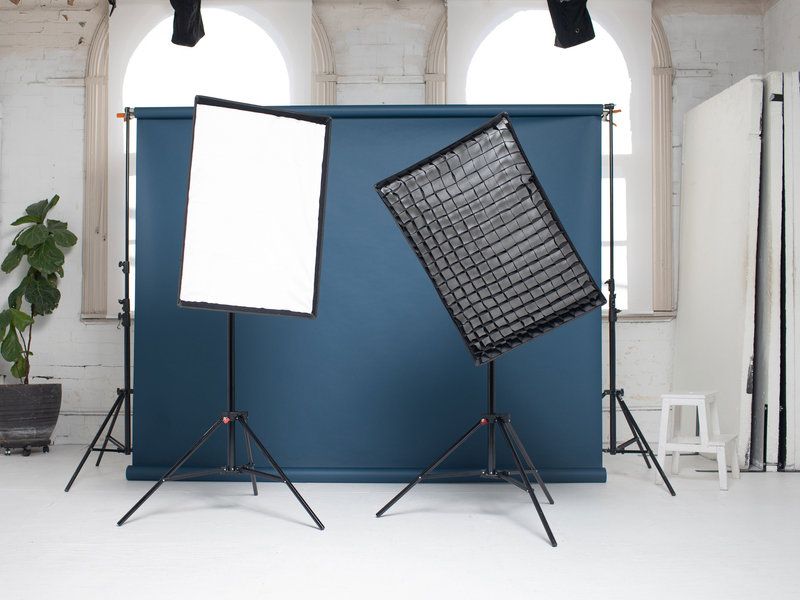
No. Studio hire includes the lighting and backdrops, including large softboxes, a 140cm octa, strip boxes, C-stands, booms and sandbags, which is most of what a group setup wants. Bring your own camera, lenses and anything specific you like to work with.
Can we bring instruments, props or sports gear?
Generally yes, and the floor is big enough for it. Give us a heads up when you book so we can make sure the layout suits what you are bringing.
What about a very large extended family?
Family groups work well here, and the change area and kitchenette make a long session with children much more bearable. Our post on family and kids photography has more on keeping younger subjects happy.
Ready to get everyone in one frame?
A good group photo is one of those images that ends up on a wall, in an annual report or on a band’s record for years. It is worth giving it a room that can actually hold the people in it.
If you have a team, a cast, a club or a very big family to photograph, come and see the space first so you can plan your rows with the real dimensions in front of you. Take a look at the photo studio or get in touch and we will help you work out the right booking for your numbers.
More Articles
- Hiring a Studio for an E-commerce or Apparel Shoot in Sydney
- Hiring a Studio for a Group or Team Photo in Sydney
- Photo Studio Hire by Area: Comparing Sydney Inner West, CBD and Alexandria
- Content Studio Hire in Sydney: Shoot a Month of Social Content in One Session
- Your Studio Shoot Day Run Sheet: How to Plan a Half Day or Full Day Hire in Sydney
- Natural Light Studio Hire in Sydney: How to Make the Most of a Daylight Studio
- How Much Does a Hot Desk Cost in Sydney? Day, Week and Month Rates
- Hiring a Studio for Dance, Movement and Performer Portraits in Sydney
- Photography Space for Rent in Sydney: What You Actually Get
- Hiring a Studio for a Beauty, Hair or Makeup Portfolio Shoot in Sydney
- Hiring a Studio for Family and Kids Photography in Sydney
- Hiring a Studio for a Fashion or Editorial Shoot in Sydney
- What to Expect Inside a Sydney Photography Studio
- Hiring a Studio for Headshots: How to Run a Smooth Headshot Day in Sydney
- How to Hire a Photography Studio for a Day in Sydney
- Affordable Photography Studio Hire in Sydney: How to Shoot on a Budget
- Renting Your Own Photography Studio vs Hiring by the Hour in Sydney
- How to Hire a Studio to Run Your Own Photography Workshop or Class in Sydney
- Product Photography in a Hired Studio: How to Plan, Light and Shoot Like a Pro
- Choosing Studio Lighting to Rent: A Photographer's Guide to Lights, Modifiers and Backdrops
- Your First Studio Photography Shoot: A Beginner's Guide
- Photography Studio Rental in Sydney
- Photography Workshops in Sydney and How to Choose One
- How to Find a Photo Studio Near You in Sydney
- Photo Studio Hire in Sydney's Inner West
- How to Choose the Right Photoshoot Space in Sydney
- Self-Shoot Studios: How to Take Your Own Photos in a Hired Space
- How to Hire a Studio for a Boudoir or Portrait Shoot
- How to Hire a Photography Studio in Sydney: The Complete Guide
- How Much Does It Cost to Hire a Photography Studio in Sydney?
- Hot Desk & Creative Coworking in Sydney's Inner West
- Hiring a Video Studio in Sydney: Green Screen, Lighting and Sound
- Dry Hire Explained: Renting Studio Lighting & Backdrops in Sydney
- Planning a Content or Personal Branding Shoot in a Sydney Studio
- Click, Learn, Repeat: A Photographer’s Growth Guide
- The Power of Versatility: Mastering Natural and Studio Light in Photography